
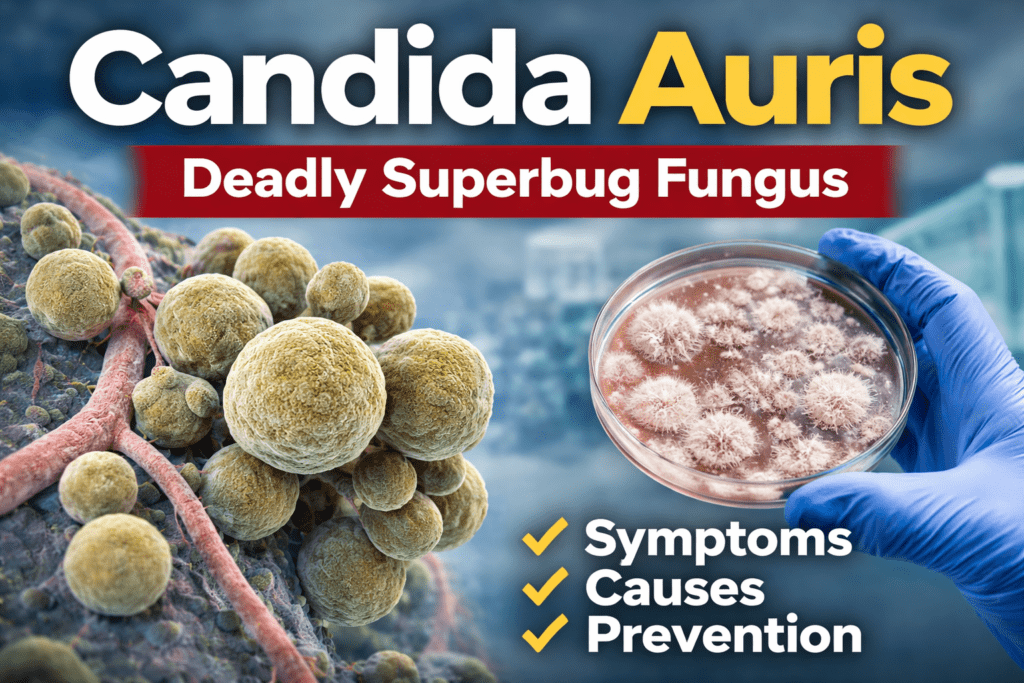
In recent years, health experts around the world have raised serious concerns about a dangerous fungal infection known as Candida auris. Often called a “superbug fungus”, Candida auris is not like common fungal infections. It is harder to treat, spreads quickly in healthcare settings, and can be life-threatening for vulnerable people.
This article explains what Candida auris is, its symptoms, causes, and most importantly, how it can be prevented.

What Is Candida Auris?
Candida auris is a type of yeast (fungus) that can cause severe infections in humans. It was first identified in 2009 and has since been reported in many countries. What makes Candida auris especially dangerous is that it is resistant to multiple antifungal medicines, which makes treatment very difficult.
Unlike other Candida species that usually live harmlessly on the skin or inside the body, Candida auris can enter the bloodstream and organs, leading to serious complications.
Why Is Candida Auris Called a Superbug Fungus
Candida auris is often described as a superbug fungus because of three main reasons:
1. Drug Resistance
Many strains of Candida auris do not respond to commonly used antifungal drugs. Some are resistant to all major antifungal classes, leaving doctors with very limited treatment options.
2. Easy Spread
This fungus can survive on surfaces such as hospital beds, medical equipment, and door handles for weeks. It spreads easily in hospitals, nursing homes, and aged care facilities.
3. Hard to Detect
Candida auris is frequently misidentified by standard laboratory tests, which can delay correct diagnosis and treatment.
superbug fungus Symptoms
The symptoms ofsuperbug fungus infection vary depending on which part of the body is affected. In many cases, symptoms are similar to other serious infections.
Common Symptoms Include:
- Fever that does not improve with antibiotics
- Chills
- Fatigue and weakness
- Low blood pressure
- Signs of bloodstream infection (sepsis)
Why Symptoms Are Confusing
superbug fungus symptoms are not specific, meaning they can look like symptoms of bacterial infections or other fungal diseases. This is why laboratory testing is essential for confirmation.

Who Is Most at Risk of superbug fungus Infection?
superbug fungus does not usually affect healthy people. The highest risk is among individuals with weakened immune systems.
High-Risk Groups Include:
- Hospitalized patients
- People in intensive care units (ICUs)
- Older adults in nursing or aged care homes
- Patients with diabetes or chronic illnesses
- Individuals with catheters, feeding tubes, or breathing tubes
- People who have taken antibiotics or antifungal medicines for a long time
What Causes superbug fungus to Spread?
The spread ofsuperbug fungus is mainly linked to healthcare environments.
Key Causes Include:
Poor Infection Control
Inadequate hand hygiene and improper cleaning of medical equipment allow the fungus to move from one patient to another.
Overuse of Antifungal Drugs
Excessive or unnecessary use of antifungal medicines has contributed to drug resistance.
Long Hospital Stays
Patients who remain hospitalized for extended periods are more exposed to contaminated surfaces and equipment.
How Is superbug fungus Diagnosed?
Diagnosing superbug fungus requires special laboratory tests. Many routine tests cannot correctly identify it, which is why advanced diagnostic methods are needed.
Early and accurate diagnosis is critical to prevent outbreaks and begin appropriate treatment.
Candida Auris Treatment Challenges
Treating Candida auris can be very difficult due to antifungal resistance. Doctors usually start treatment with a class of drugs called echinocandins, but even these may not always work.
In severe cases, treatment plans must be adjusted based on laboratory results and patient response. Unfortunately, mortality rates can be high, especially among critically ill patients.

How to Prevent Candida Auris Infection
Prevention is currently the most effective defense against Candida auris.
Prevention Measures Include:
In Healthcare Settings
- Strict hand hygiene practices
- Thorough cleaning and disinfection of surfaces
- Isolating infected or colonized patients
- Proper use of personal protective equipment (PPE)
For the General Public
- Follow medical advice during hospital visits
- Avoid unnecessary use of antibiotics and antifungal drugs
- Maintain good personal hygiene
- Support infection control policies in healthcare facilitie
Is superbug fungus Life-Threatening?
Yes, superbug fungus can be life-threatening, particularly for people with weakened immune systems. However, early detection, proper infection control, and specialized medical care can significantly reduce the risk of severe outcomes.
WHO page about superbug fungus
Final Thoughts
Candida auris is a serious global health concern that highlights the growing problem of drug-resistant infections. While it poses a major threat in hospitals and care facilities, awareness and prevention can help control its spread.
Understanding the symptoms, causes, and prevention strategies is essential for protecting vulnerable populations and reducing future outbreaks.