
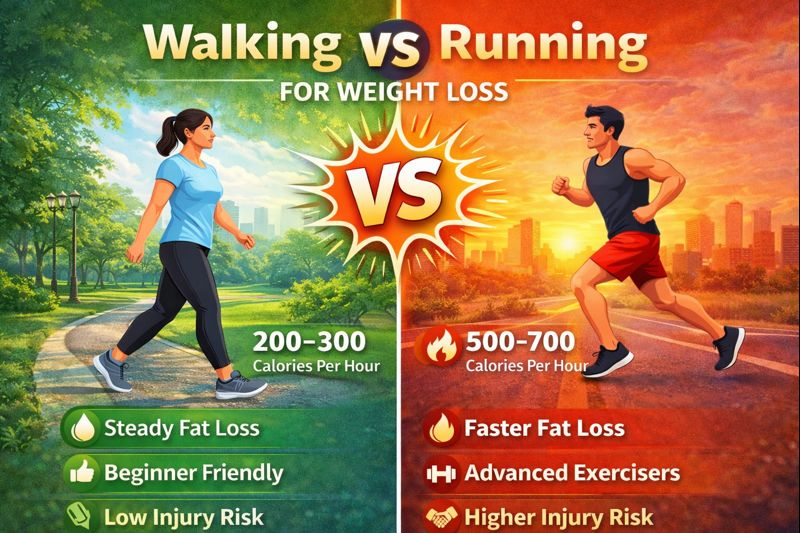
Walking vs Running for Weight Loss: Which One Is Better?
Losing weight does not always require intense gym workouts or expensive equipment. Two of the most common and effective exercises for weight loss are walking and running. Both are simple, natural movements, but many people ask the same question: walking vs running for weight loss — which one works better?
The answer depends on your body, lifestyle, and fitness level. This article provides a clear, practical comparison to help you choose the right option for sustainable weight loss.
Understanding Weight Loss Basics
Weight loss occurs when you burn more calories than you consume. Physical activity helps increase calorie burn, improve metabolism, and support fat loss over time. The best exercise is not the hardest one — it is the one you can do consistently.
Walking and running both support calorie burning, but they affect the body differently.

Weekly Exercise Plan for Weight Loss
Walking for Weight Loss
Walking is one of the safest and most beginner-friendly exercises. It requires no special skills and puts minimal stress on joints.
Benefits of Walking
- Low impact and easy on knees and joints
- Suitable for beginners, seniors, and overweight individuals
- Easy to maintain long-term consistency
- Reduces stress and improves mental health
- Can be done anywhere without equipment
A brisk walk increases heart rate and helps the body use fat as a fuel source, especially when done regularly.
Calories Burned by Walking
On average, a person burns:
- 200–300 calories per hour during brisk walking (depending on body weight and speed)
While walking burns fewer calories per minute than running, it can still lead to effective weight loss when done for longer durations.
Running for Weight Loss
Running is a high-intensity exercise that significantly increases calorie burn in a shorter time.
Benefits of Running
- Burns more calories per minute
- Improves cardiovascular endurance
- Boosts metabolism even after the workout
- Saves time compared to walking
- Helps reduce body fat percentage faster
Running engages more muscles and requires higher energy output, which leads to faster results for some people.
Calories Burned by Running
On average:
- 500–700 calories per hour are burned during moderate running
This makes running appealing for people who want quicker results and have limited workout time.
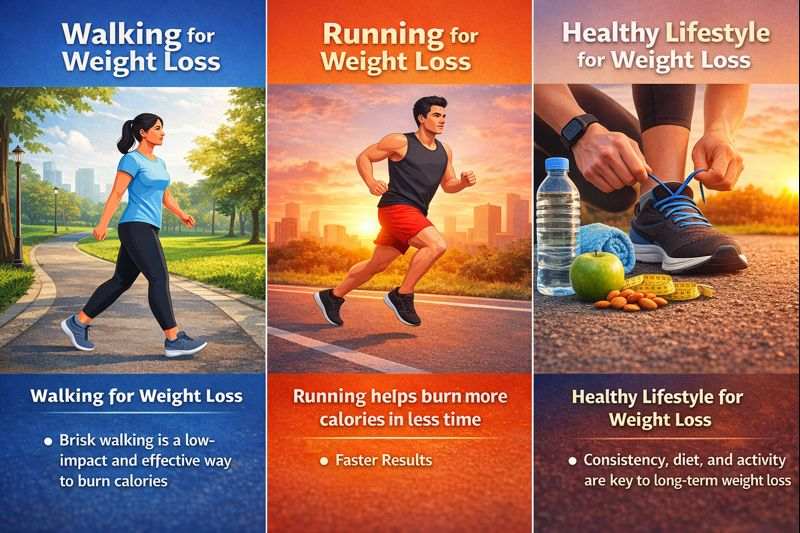
Walking vs Running: Key Differences
1. Calorie Burn
Running burns more calories per minute, but walking can match total calorie burn if done for longer periods.
2. Injury Risk
Walking has a very low injury risk. Running places more stress on joints and can lead to injuries if done incorrectly or without proper recovery.
3. Sustainability
Walking is easier to maintain daily. Many people quit running due to fatigue or injuries, which affects long-term weight loss.
4. Fitness Level
Beginners often struggle with running but can comfortably start with walking and gradually improve.
Which Is Better for Belly Fat Loss?
Spot reduction is a myth — belly fat reduces when overall body fat decreases. Both walking and running help reduce belly fat when combined with a calorie-controlled diet.
However:
- Walking is better for long, steady fat burning
- Running is better for faster calorie deficit
Consistency matters more than intensity.
“Read our full guide on Walking vs Running for Weight Loss”
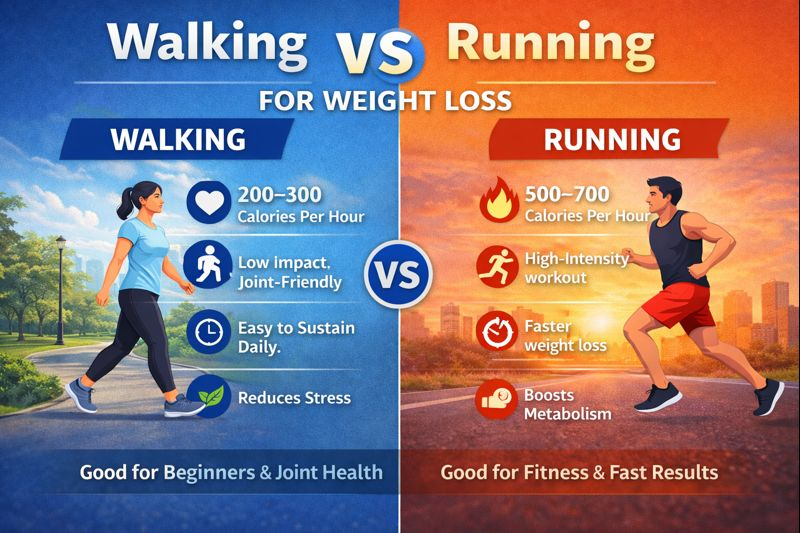
Walking or Running: Which Should You Choose?
Choose Walking If:
- You are a beginner
- You are overweight or have joint pain
- You prefer low-impact exercise
- You want a sustainable daily routine
Choose Running If:
- You have good fitness levels
- You want faster calorie burn
- You enjoy high-intensity workouts
- You have limited time
Best Strategy for Weight Loss
The most effective approach is combining both walking and running.
Example weekly plan:
- 3 days brisk walking (30–45 minutes)
- 2 days light running or jogging
- 2 days rest or active recovery
This balanced method reduces injury risk while maximizing fat loss.
Diet and Lifestyle Matter More Than Exercise
No exercise can outwork a poor diet. For best results:
- Eat protein-rich, whole foods
- Reduce sugar and processed foods
- Drink enough water
- Sleep 7–8 hours daily
Exercise supports weight loss, but nutrition drives results.
“Read our full guide on Walking vs Running for Weight Loss”
Final Verdict: Walking vs Running for Weight Loss
There is no single winner.
- Walking is safer, more sustainable, and ideal for beginners.
- Running burns calories faster and suits experienced individuals.
The best exercise is the one you can stick with long-term. Consistency, not intensity, determines success.